

- Home

- Baby Care
- Meri beti abhi 5 mahine ki hai aur Main feeding karva rahi hun lekin Mere hath pairon mein roj aana Dard hota hai mujhe pen killer lena padati hai use Dard ko mitane ke liye aur कभी-कभी chakkar bhi aate Hain Bal bhi safed ho gaye hain aur itne jyada jhad rahe hain aur chalne mein Sath bhi bhul jaati Hai Meri iska kya matlab hai
Baby Care
2 months ago
Q: Meri beti abhi 5 mahine ki hai aur Main feeding karva rahi hun lekin Mere hath pairon mein roj aana Dard hota hai mujhe pen killer lena padati hai use Dard ko mitane ke liye aur कभी-कभी chakkar bhi aate Hain Bal bhi safed ho gaye hain aur itne jyada jhad rahe hain aur chalne mein Sath bhi bhul jaati Hai Meri iska kya matlab hai
 5Answer


Quick answer
Joint pain after pregnancy is very common and, in most cases, temporary. It is usually caused by the pregnancy hormone relaxin still loosening your joints, extra weight, disturbed sleep, and the constant lifting, carrying and feeding a newborn demands. Most of it is not true arthritis. It settles within a few weeks to a few months. See a doctor if joints are swollen, red, warm or stiff for over 30 minutes each morning, or if pain is severe, one-sided or not improving, as this can signal rheumatoid arthritis or another condition that needs treatment.
Key takeaways
Aching joints, wrists and hips after delivery are common. Studies suggest tendon problems alone, such as De Quervain's "mommy thumb," affect around 1 in 10 new mothers.
Most postpartum joint pain is mechanical and temporary, driven by lingering relaxin, weight, posture, feeding position and carrying your baby, not by true arthritis.
The hormone relaxin loosens ligaments in pregnancy and its effect can persist for several months afterwards, especially while breastfeeding.
True arthritis is different. Rheumatoid arthritis (an autoimmune disease) can flare or first appear in the first year after birth, and needs proper medical treatment.
Paracetamol and ibuprofen are both considered first-choice, breastfeeding-safe pain relief at standard doses, but confirm with your doctor.
Red flags (swelling, warmth, prolonged morning stiffness, fever, severe or spreading pain) mean you should see a doctor rather than wait it out.
Is joint pain after pregnancy normal?
Yes. Feeling stiff, achy or sore in your joints in the weeks and months after giving birth is one of the most common physical complaints of new mothers, and most of the time it is your body recovering, not a disease. Pregnancy changes your hormones, your weight, your posture and your ligaments, and then a newborn adds hours of lifting, rocking, feeding and broken sleep on top. Your joints and tendons feel all of it.
The important thing to understand is that "joint pain after pregnancy" and "arthritis after pregnancy" are not the same. Arthritis means actual inflammation or wear inside a joint. Much of what new mothers feel is temporary strain on ligaments, tendons and muscles that eases as the body recovers. Knowing which one you are dealing with helps you treat it correctly and know when to seek help.
What is postpartum arthritis, and how is it different from ordinary joint pain?
"Postpartum arthritis" is a loose term people use for joint pain after childbirth, but it covers several very different things:
Type | What it actually is | Typical feel |
|---|---|---|
Mechanical joint pain | Strain from relaxin-loosened joints, weight, posture, lifting and feeding | Achy, worse with activity, eases with rest, improves over weeks |
De Quervain's tenosynovitis ("mommy thumb") | Inflamed tendons on the thumb side of the wrist from repetitive lifting of the baby | Sharp pain at the wrist and base of the thumb, worse when gripping or lifting |
Carpal tunnel syndrome | A pinched nerve at the wrist, often from fluid retention | Tingling, numbness or pain in the thumb and first fingers, often at night |
Osteoarthritis | "Wear and tear" of joint cartilage, more likely with older age or higher weight | Stiff, achy joints, worse with use |
Rheumatoid arthritis (RA) | An autoimmune disease that attacks the joint lining | Symmetric swelling of small joints, long morning stiffness, fatigue |
The first three are the most common in new mothers and are usually treatable and temporary. Osteoarthritis and rheumatoid arthritis are true arthritis and need a doctor's assessment.
Where does it hurt? Common sites and why
Area | Why it hurts after pregnancy |
|---|---|
Wrists and thumbs | De Quervain's tenosynovitis from lifting and holding the baby, plus hormonal tissue laxity. Very common. |
Hands and fingers | Carpal tunnel (nerve) or, if joints are swollen and symmetric, possible rheumatoid arthritis |
Hips and pelvis | Loosened pelvic ligaments from relaxin, plus one-sided carrying and feeding postures |
Knees | Extra weight, altered posture and lingering ligament laxity, so kneeling and stairs feel harder |
Lower back | Weakened core after pregnancy, bending over cots and baths, and feeding hunched forward |
Feet and ankles | Arch and ligament changes from pregnancy that do not always fully reverse |
What causes arthritis and joint pain after pregnancy?
The hormone relaxin
During pregnancy your body releases relaxin to loosen ligaments and let the pelvis open for birth. Its effect does not switch off the moment you deliver. Joint laxity can linger for several months afterwards, and often longer while you are breastfeeding, because breastfeeding keeps oestrogen low. Looser joints are less stable and more easily strained.
Carrying, lifting and feeding
This is the biggest and most overlooked cause. Lifting a growing baby dozens of times a day, holding a feeding position for long stretches, and repeated bending over cots, prams and bathtubs put steady strain on the wrists, thumbs, back and hips. This is exactly why "mommy thumb" is so common.
Extra weight and changed posture
Weight gained in pregnancy does not vanish at delivery, and it loads the knees, hips and spine. Posture also shifts to accommodate feeding and carrying, which stresses joints that are not used to it.
Broken sleep and inflammation
Sleep deprivation raises the body's overall inflammation and lowers pain tolerance, so aches feel worse. Recovery from birth itself is also an inflammatory process.
Low calcium and vitamin D
Pregnancy and breastfeeding draw heavily on calcium stores, and vitamin D deficiency is very common in Indian women. Both can leave bones and muscles aching and are worth checking.
Autoimmune arthritis (rheumatoid arthritis)
The first year after childbirth is a recognised window for rheumatoid arthritis to flare in women who already have it, or to appear for the first time. This is a true medical condition, not simple strain, and is covered in the red-flags section.
Is it just temporary joint pain, or could it be arthritis?
Use this comparison. If your symptoms mostly sit in the left column, they are likely temporary and mechanical. If several sit in the right column, see a doctor to rule out inflammatory arthritis.
Likely temporary strain | Possible inflammatory arthritis (see a doctor) |
|---|---|
Achy, comes with activity, eases with rest | Joints swollen, warm or red |
No visible swelling | Morning stiffness lasting more than 30 to 60 minutes |
Improves week by week | Not improving, or getting worse |
Linked to lifting, feeding, posture | Symmetric (same joints on both sides, for example both hands) |
No fever or feeling unwell | Fever, night sweats or general unwellness |
One area, activity-related | Several joints, with deep fatigue |
How long does postpartum joint pain last?
For most women, mechanical joint pain and stiffness ease as relaxin clears, weight normalises and the body recovers, usually within a few weeks to around three to five months after delivery. Pain linked to breastfeeding posture or ligament laxity can last as long as you are nursing and often settles after weaning. De Quervain's "mommy thumb" tends to improve once the aggravating movements are reduced and treated, sometimes with a splint.
If pain lasts beyond a few months, is severe, or comes with the warning signs above, it should be assessed rather than simply waited out. Persistent or inflammatory joint pain does not usually resolve on its own.
How to manage and treat joint pain after pregnancy
Breastfeeding-safe pain relief
Option | Breastfeeding status | Notes |
|---|---|---|
Paracetamol (acetaminophen) | First choice, safe | Passes into milk in very small amounts, well below infant doses |
Ibuprofen | First-choice anti-inflammatory, safe | Preferred NSAID in breastfeeding, poor transfer into milk, also reduces swelling |
High-dose aspirin | Avoid while breastfeeding | Use only if specifically advised by a doctor |
Any other painkiller | Check first | Confirm with your doctor or pharmacist before use |
Always use the lowest effective dose for the shortest time, and confirm with your doctor, especially if you have other health conditions.
Self-care that genuinely helps
Protect your wrists and thumbs. Lift your baby with open palms scooping under the body rather than gripping with thumbs out. A thumb or wrist splint helps De Quervain's, especially at night.
Fix your feeding posture. Bring the baby up to you with pillows rather than hunching down. Alternate sides and positions.
Use heat and cold. A warm compress or shower eases stiffness; cold packs (15 to 20 minutes) reduce a swollen, inflamed tendon or joint.
Move gently and often. Short walks and gentle stretching keep joints mobile. Avoid long periods frozen in one position.
Rebuild strength slowly. Once cleared by your doctor, gentle core, hip and wrist strengthening protects your joints. A physiotherapist can guide this, and is especially useful for stubborn wrist, back or pelvic pain.
Support your nutrition. Ensure enough calcium and protein, and ask your doctor about checking and correcting vitamin D, which is very commonly low.
Protect your sleep where you can. Rest lowers pain sensitivity, so accept help and nap when the baby sleeps.
India-specific note
Vitamin D and calcium deficiency are widespread among Indian women, so testing and supplementing where needed is often worthwhile. If you sit or feed on the floor, use back support and avoid deep squatting while joints are still lax. Traditional postpartum oil massage (maalish) can soothe aching muscles, but keep pressure gentle around loose joints and stop if it increases pain.
When should you see a doctor?
Book a review, and do not simply wait it out, if you have any of the following:
Joints that are swollen, red, warm or visibly puffy.
Morning stiffness lasting more than 30 to 60 minutes.
Symmetric pain and swelling, such as both hands or both wrists, especially with deep fatigue (possible rheumatoid arthritis).
Pain that is severe, worsening, or not improving after a few months.
Fever, weight loss or feeling generally unwell alongside joint pain.
Numbness, tingling or weakness in the hand (possible carpal tunnel needing treatment).
Sudden severe back or hip pain, or pain on standing or walking, which rarely can signal a pregnancy or lactation-related bone problem and should be checked promptly.
Early assessment matters most for rheumatoid arthritis, because starting treatment early protects the joints.
Mylo Parents Asked
Can pregnancy actually cause arthritis?
Pregnancy does not directly cause osteoarthritis, but the hormonal and physical changes can trigger temporary joint pain, and the year after birth is a known window for rheumatoid arthritis to flare or first appear. Most postpartum joint pain, though, is strain rather than true arthritis.
Why do my wrists and thumbs hurt so much after having a baby?
This is most likely De Quervain's tenosynovitis, sometimes called "mommy thumb," from the repeated lifting and holding a newborn requires, made easier to trigger by hormonal tissue laxity. It affects roughly 1 in 10 new mothers and usually improves with rest, technique changes, a splint and safe anti-inflammatories.
Will my joint pain go away after I stop breastfeeding?
Often, yes. Breastfeeding keeps oestrogen low, which can prolong joint laxity, so many women find their joints feel more stable after weaning. If pain persists well beyond that, get it checked.
Is it safe to take painkillers while breastfeeding?
Paracetamol and ibuprofen are both considered first-choice and safe at standard doses while breastfeeding, as very little passes into milk. Avoid high-dose aspirin unless your doctor advises it, and check before taking anything else.
Could my joint pain mean I have rheumatoid arthritis?
It might, if you have symmetric swelling in small joints (like both hands), morning stiffness lasting over 30 to 60 minutes, and marked fatigue. These signs deserve a prompt doctor's visit and possibly blood tests, because early treatment makes a big difference.
What helps postpartum knee and hip pain specifically?
Managing weight gradually, correcting posture when carrying and feeding, gentle strengthening once cleared, heat for stiffness, and supportive footwear all help. Avoid deep squatting and heavy one-sided carrying while your joints are still lax.
The bottom line
Aching, stiff or painful joints after pregnancy are common, expected, and in most cases temporary. Lingering relaxin, extra weight, poor sleep and the sheer physical work of caring for a newborn strain your wrists, hips, knees and back while your body recovers. Most of it eases within a few months with rest, safe pain relief, better technique and gentle movement. What you should not ignore is swelling, warmth, long morning stiffness, symmetric pain or feeling unwell, because these can point to rheumatoid arthritis or another condition that treats far better when caught early. Be patient and gentle with your body, and reach out to your doctor if the pattern looks inflammatory rather than just tired.
References
StatPearls / NIH. De Quervain Tenosynovitis.
PubMed Central. Mommy's thumb: De Quervain's tenosynovitis in a new mother.
Cleveland Clinic. Postpartum joint pain and De Quervain's tenosynovitis.
NHS. Carpal tunnel syndrome.
American College of Rheumatology. Rheumatoid arthritis and pregnancy / postpartum flare.
The Breastfeeding Network. Analgesics (painkillers) and breastfeeding.
InfantRisk Center. Safely managing pain during lactation.
World Health Organization / ICMR-NIN. Vitamin D and calcium needs in pregnancy and lactation.
Related reads on Mylo
Back pain after delivery: causes and relief
This article is for information only and does not replace personalised advice from a doctor, physiotherapist or rheumatologist.




Hair fall after delivery, or commonly referred to as postpartum hair loss can be very distressing for women. It is one of the most significant issues with new mothers, and they can usually take this kind of hair fall to their hearts because they already have a lot to deal with. However, to-be-moms and new moms, hear us closely because there are some effective ways to deal with postpartum hair fall and make it go away!
What is Postpartum Hair Loss?
Postpartum hair loss refers to the excessive hair shedding experienced by women 3-4 months after giving birth. It can be extremely distressing but you must remember that it is a part of pregnancy and only temporary. Most women notice that their hair grows back to its original volume (before pregnancy volume) within a year.
Why Does Postpartum Hair Loss Occur?
Postpartum hair loss or hair fall after delivery occurs mainly due to the sudden hormonal changes taking place inside your body. During pregnancy, the levels of estrogen, progesterone and prolactin spike along with the blood volume and circulation. This prevents your hair from falling and boosts hair growth.
But soon after the birth of your baby, most of these hormones return to their original level and the hair falling process resumes. You may feel like you are losing all the hair you may have lost over nine months all at once, but it will pass. There can be other causes of hair fall after delivery which we will discuss in detail further into the article.
How Long Does Postpartum Hair Loss Last?
We understand how distressing it can be to lose hair but remember, postpartum hair loss is only temporary. Postpartum hair loss can last up to a year after the arrival of your baby. Ideally, you should see a difference within six months. Hair fall after delivery usually peaks around 3-4 months. So, if your hair should regain their volume by the time your little one turns one.
What are the Signs of Postpartum Hair Loss?
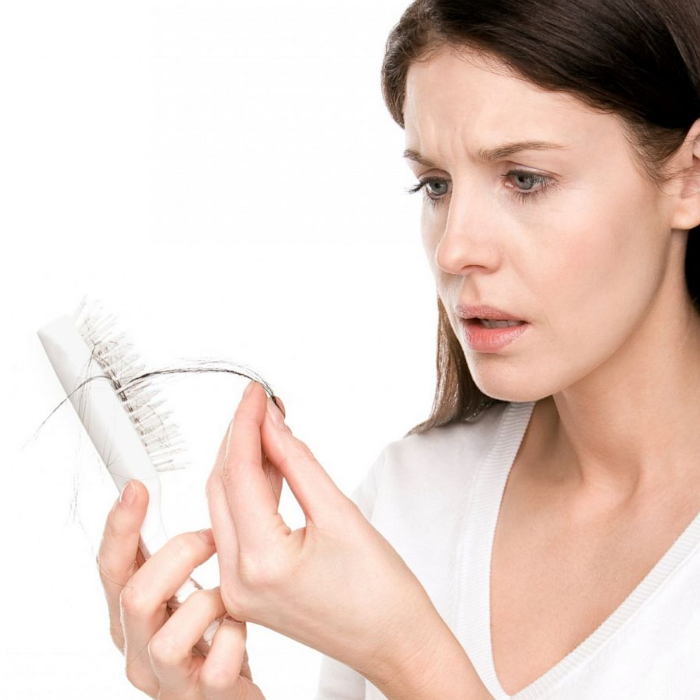
The most prominent sign of postpartum hair loss is that you’ll start noticing more than usual loose hair strands on your brush/comb, pillow, towel and shower floor. You may notice fallen hair stuck to your clothing after a brush.
What Causes Hairfall After Pregnancy?
As discussed, hair fall after delivery is caused by the sudden hormonal changes you experience during and after pregnancy. Here are some other causes of postpartum hairfall:
1. Drop in Estrogen Levels
One of the main reasons of hair fall after pregnancy is the fall in hormone estrogen levels. This makes your hair go into a resting mode, and they may fall for about four months after the baby has been delivered.
2. Stress
Another cause of hair fall post-pregnancy, is stress. Of course, with the baby coming and the unstable change in routine and lifestyle causes stress, which is a huge reason for hair fall post-pregnancy.
3. Change in Thyroid & Iron Levels
Some women may experience changes in their thyroid and iron levels after pregnancy. If the hair fall does not go away in a span of a few months, you may be suffering from a change in thyroid levels and anaemia.
With that said, we are here with some good news too! There are many effective home remedies and tips that can help reduce hair fall after delivery.
Tips by Dermatologists for New Mothers
Here are a few tips by dermatologists on how to control hair fall after delivery:
1. Continue Consuming Prenatal Vitamins
Consume prenatal vitamins as they help a lot in post-pregnancy hair fall. However, you must consult your physician before consuming any vitamins.
2. Consume a Balanced Diet
It is imperative to have a healthy diet that constitutes essential nutrients and minerals, which makes your hair healthier and stronger.
3. Use an Anti-Hairfall Oil
Anti-hair fall oils help reduce hair fall by strengthening the roots of your hair and supplementing essential nutrients such as vitamin E, onion seed oil, amla, argan oil, castor oil, Bhringraj, and many other natural oils; thus, reducing hair fall and promoting hair growth. The Mylo Anti hair fall oil has been especially prepared using these effective ingredients and is extremely safe to use after childbirth.
4. Be Gentle with Your Hair
Try to be gentle with your hair when you wash them or oil them. Use gentle circular motions on your scalp and not a scrubbing motion as it can make your hair fall off a lot.
5. Avoid Styling
Try to avoid styling your hair using hair tools that involve extreme heat. Additionally, you should avoid any heat treatments in the salon as much as you can.
6. Stay Hydrated
Consuming water always helps. Drink as much water as you can as it will make your hair hydrated.
Be consistent in following up with these remedies, and you will surely a difference.
Be Careful of Hair Tourniquets
As a new mother, you should watch out for any hair tourniquets that may harm your little one. With you experiencing hair fall after delivery, the chances of hair tourniquets can rise. A hair tourniquet forms when a hair strand falls out and wraps around the baby’s finger, toe or other body part. Sometimes, a single hair strand can wrap so tightly that it may prevent blood circulation or cause an infection.
How Does Hair Grow?
Hair grows from small pores in your scalp’s skin called follicles. Hair follows a cycle of growing and shedding throughout our lifetime in three phases:
-
Anagen Phase: This phase is characterized by active hair growth. It lasts between 2-6 years and most of your hair are in this phase at any given time.
-
Catagen Phase: This is a short, transitional phase wherein the hair follicles shrink.
-
Telogen Phase: This phase is a resting phase, lasting for three months. The follicle releases the hair and they start falling out.
Postpartum hair loss is also called the telogen effluvium phase.
Final Thoughts
Postpartum hair loss is temporary and will pass. Be consistent with hair fall control remedies and you will notice a difference soon. If you don’t see any improvement even after a year of experiencing hair fall after delivery, it’s best to consult a dermatologist.

Read More Answers (3)


Ask your question about baby care
Get expert answers within 5 minutes for FREE only on Mylo App
Related Questions
Aaj mere c section ko 1 month ho gye....bt Abhi bhi mere stiches ke just niche aur aas pass pain rehta hai....uthne baithne me bahut jyada hota hai.....kya ye normal hai.....aur ye pain kab tk rhega??? Pls reply

Mere mann mein ek baat aaj subah se chal rahi hai...main bank employee hu but main March se hi leave par hu aur delivery tak leave par hi rahungi..mere husband bhi bank employee hai but daily office ja rahe hain aur hmare sath hi reh rahe hain..mujhe corona se bahut darr lag raha hai ke..main chahti hu corona ke karan main labour pain ki wait na katu aur planned delivery krva ki...kya koi bta sakta hai ke main kis week mein delivery ke bare mein plan kr sakti taki baby bhi weak na ho....abhi tak meri sab reports normal rahi hai..baby wieght bhi theek chal raha hai aur doctor ne mujhe c sec ka hi bola hai kyoki meri first delivery bhi c sec se hi hui thi ...please answer...I am really stressed
Hlo dear frnd Meri lmp 20 March hai bahut din se Meri breast mein pain ho raha hai hath lagane per bhi Dard hota hai pet ke left side mein bhi kabhi normal kabhi high pen ho jata hai thakan to bahut jyada aur nind se uthne ka bilkul man nahin karta pura din Puri Raat Mujhe nind aati hai itni main soi rahti hun Aisa kyon Ho Raha hai main khud se Sona nahin chahti pata nahin kyon mujhe bahut nind aati hai please kuchh recommend kari ki main jyada Na Soya karo
Posted In
Baby Care
4475456 Posts
Related Articles

Watery Eyes in Babies: Blocked Tear Duct Causes, Care and When to See a Doctor

Second Baby Planning: How Long Should You Wait Between Pregnancies?

Baby Kidney Swelling on Ultrasound (Antenatal Hydronephrosis): Will It Go Away?

Foods for Height Growth in Toddlers and Kids: What Really Helps (Indian Guide)
Related Topics


AWARDS AND RECOGNITION

Mylo wins Forbes D2C Disruptor award

Mylo wins The Economic Times Promising Brands 2022
AS SEEN IN













- Mylo Care: Effective and science-backed personal care and wellness solutions for a joyful you.
- Mylo Baby: Science-backed, gentle and effective personal care & hygiene range for your little one.
- Mylo Community: Trusted and empathetic community of 10mn+ parents and experts.


